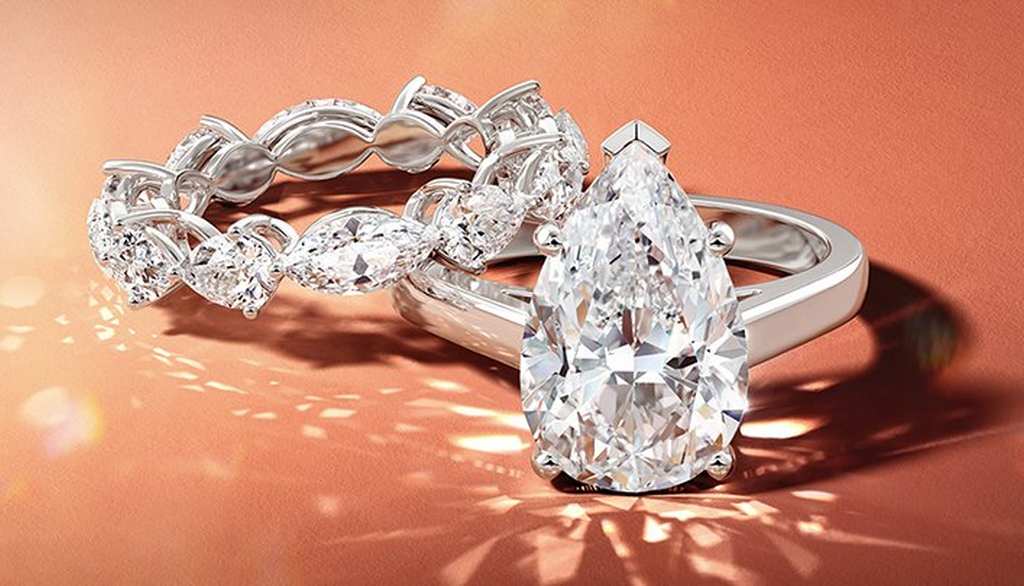


Buying a diamond separately from its ring setting gives you more control over the finished piece. For shoppers comparing loose man made diamonds, that flexibility can be especially useful because the stone can be assessed on its own before decisions are made about metal, setting style or surrounding accent stones.
A loose lab-grown diamond is not yet mounted into jewellery. This makes its shape, measurements, grading information and visible characteristics easier to compare. For UK buyers planning an engagement ring, anniversary piece or personalised design, choosing the centre stone first can also make the design process feel more deliberate.
What Are Loose Man Made Diamonds?
Loose man made diamonds are laboratory-grown diamonds sold without being permanently set into a ring, pendant or other piece of jewellery.
They are produced through controlled technological processes designed to create diamond crystal structures rather than being extracted from the earth. In practical buying terms, the word “loose” simply describes how the diamond is sold.
Buying the stone separately allows shoppers to compare important characteristics before committing to a jewellery design. These can include:
- diamond shape
- carat weight
- cut quality
- colour grade
- clarity grade
- dimensions
- grading documentation
- visual balance
This approach is particularly useful for custom engagement rings because the setting can be selected around the proportions and appearance of the chosen diamond.
Start With Cut and Overall Appearance
Cut deserves close attention because it strongly influences how a faceted diamond handles light. A well-proportioned diamond can appear lively and bright, while a less successful combination of proportions may reduce its visual impact.
For round brilliant diamonds, grading reports may provide an overall cut grade. Fancy shapes such as oval, pear, emerald or cushion cuts require a broader visual assessment because their beauty cannot always be judged from a single grade.
Look at the stone as a complete object rather than concentrating only on its certificate.
For example, an oval diamond may have attractive weight and clarity on paper but still show a noticeable dark area across its centre. Emerald cuts, meanwhile, reveal more of their internal appearance because of their long, open facets.
Carat Weight and Visible Size Are Not the Same Thing
Carat measures weight rather than face-up dimensions. Two diamonds of identical carat weight can therefore look different in size when viewed from above.
Some stones carry more of their weight in depth. Others spread their weight across a wider surface.
That distinction matters when comparing loose man made diamonds for an engagement ring, because checking both carat weight and millimetre measurements gives a more realistic picture of how large the centre stone may appear once mounted.
A buyer considering a one-carat oval, for instance, should not assume every one-carat oval will have identical length and width.
How Much Do Colour and Clarity Matter?
Colour and clarity should be evaluated together with the stone’s shape, size and intended setting rather than treated as isolated numbers.
Diamond colour grading generally considers how much body colour is visible. The practical difference between neighbouring grades may be subtle, especially once a stone is mounted.
Metal choice can also influence perception. A near-colourless diamond may appear different in platinum or white gold compared with yellow gold.
Clarity describes internal and external characteristics visible under standard grading conditions. Higher clarity grades are not automatically necessary for a beautiful ring. Many shoppers instead look for a diamond that appears clean to the unaided eye at normal viewing distance.
Certain shapes, however, can make inclusions easier to notice. Step-cut diamonds such as emerald cuts tend to expose internal characteristics more readily than highly faceted brilliant cuts.
Why Certification Deserves Attention
A grading report gives buyers an independent man made diamonds point for comparing stones.
Depending on the grading laboratory and diamond, the report may include information about:
- carat weight
- measurements
- colour
- clarity
- proportions
- polish
- symmetry
- fluorescence, where assessed
- identifying characteristics
Certification should support a buying decision rather than replace visual inspection. Two diamonds with similar grades can still differ in appearance because of proportion combinations, facet patterns and inclusion placement.
UK shoppers researching loose stones through specialists such as novitadiamonds.co.uk can use grading information alongside photographs, videos and measurements to narrow down suitable options.
Which Diamond Shape Works Best?
There is no single shape that suits every ring. Shape changes both the visual character of the diamond and the way it interacts with a setting.
| Diamond shape | Typical visual character | Setting consideration |
|---|---|---|
| Round | Symmetrical and brilliant | Works with most ring styles |
| Oval | Elongated and bright | Check symmetry and centre appearance |
| Emerald | Clean, geometric facets | Clarity becomes more noticeable |
| Pear | Distinctive tapered outline | Point protection matters |
| Cushion | Soft corners and varied facet patterns | Compare length-to-width proportions |
| Radiant | Angular outline with lively faceting | Suits both solitaire and halo designs |
Personal preference should come first. A technically impressive diamond is not necessarily the right stone if its shape or facet pattern does not suit the wearer.
Match the Diamond to the Ring Setting
Choosing the centre diamond before the setting can prevent design compromises later.
A solitaire places most visual attention on the centre stone, making proportions and symmetry particularly noticeable. A halo can increase the visual spread around the centre diamond, while a pavé band introduces additional sparkle across the shoulders of the ring.
Prong placement matters too. Pear and marquise diamonds have pointed ends that may benefit from protective setting designs. Larger or elongated diamonds may also need a setting engineered to keep the stone secure and visually balanced.
Metal colour influences the final appearance as well. Platinum and white gold create a cool-toned frame, while yellow and rose gold introduce warmer contrast.
Common Mistakes When Comparing Loose Diamonds
One frequent mistake is choosing entirely from grading numbers. Certificates are valuable, but diamonds with comparable grades do not always look identical.
Another is assuming larger carat weight automatically creates the most impressive appearance. Dimensions, proportions and setting design can sometimes matter just as much.
Buyers should also avoid ignoring the intended ring setting until the last stage. The width, shape and proportions of a diamond can affect everything from prong placement to band balance.
Finally, do not treat clarity or colour grades as a competition. Paying for a higher grade that produces no noticeable visual difference may leave less room in the budget for the qualities you actually value.
Build the Ring Around the Stone You Actually Prefer
A useful way to shortlist loose diamonds is to establish priorities before comparing individual listings. Decide whether visual size, shape, brightness, colour, clarity or budget matters most.
Then compare several stones within those boundaries rather than searching for the highest possible grade in every category.
For many UK engagement-ring buyers, this approach makes the process more manageable. Instead of treating a diamond as a collection of grading numbers, it becomes easier to judge how its proportions, appearance and setting will work together in the finished jewellery piece.