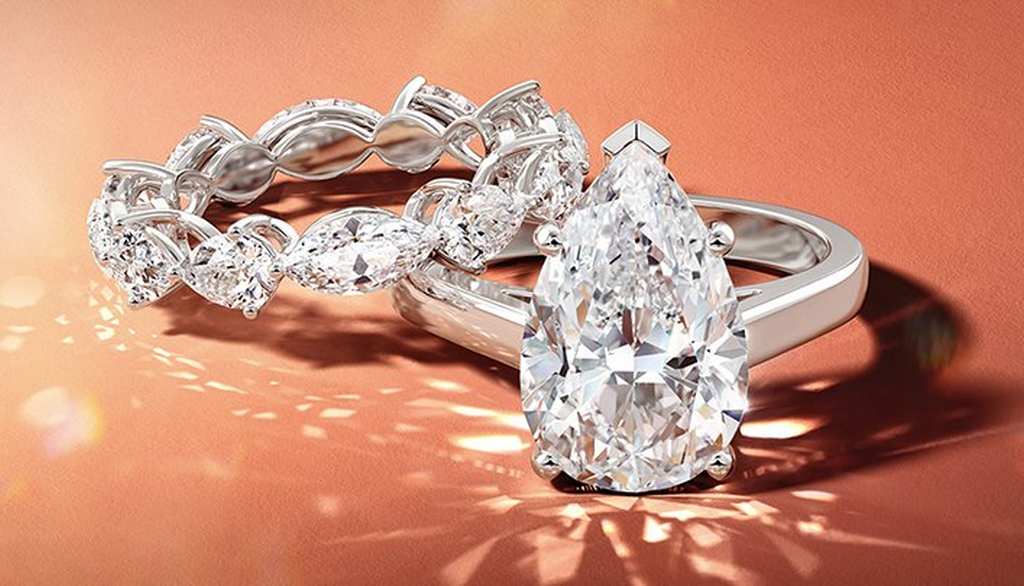


Two diamonds can look identical under showroom lighting, carry similar grading details and sit in exactly the same engagement ring setting, yet have very different prices. The reason may have little to do with their beauty. One was formed naturally beneath the Earth’s surface, while the other was created in a controlled laboratory.
That difference raises a reasonable question: if both stones are real diamonds, what exactly are buyers paying for?
The answer involves origin, rarity, appearance, resale expectations and personal preferences. Understanding these distinctions makes it easier to decide where spending extra money genuinely matters.
The Difference Begins With How the Diamond Forms
Natural diamonds develop deep within the Earth under intense heat and pressure. Geological processes eventually bring some of these crystals closer to the surface, where they can be recovered through mining.
Laboratory-grown diamonds are produced using technology that recreates conditions suitable for diamond crystal growth.
Two production methods are commonly used:
-
High Pressure High Temperature (HPHT): Carbon crystallizes into diamond under extremely high pressure and temperature.
-
Chemical Vapor Deposition (CVD): Carbon-containing gases are used to grow diamond layers on a small diamond seed inside a controlled chamber.
Despite their different origins, both materials have essentially the same chemical composition, crystal structure and physical properties.
A laboratory-grown diamond is not cubic zirconia or moissanite. Those are different materials that may resemble diamonds but behave differently.
This distinction matters when comparing engagement rings because a properly produced laboratory-grown diamond offers the same fundamental characteristics that make natural diamonds suitable for fine jewelry.
Can You Actually See the Difference?
A natural diamond and a laboratory-grown diamond of comparable quality will generally look the same to the naked eye.
Both can display brilliance, fire and scintillation. Both can have inclusions, variations in color and differences in cutting quality.
Professional gemological laboratories can distinguish their origins using specialized equipment, but appearance alone is not a reliable way to identify how a diamond formed.
Consider two round brilliant diamonds with similar proportions, color and clarity. If both have been cut well, their visual performance can be extremely close.
Now consider a poorly proportioned natural diamond beside an excellent-cut laboratory-grown diamond. The laboratory-grown stone may appear brighter, even though the natural stone carries a higher price.
The explanation is the cut, rather than the origin.
Cut Quality Deserves More Attention Than the Label
The arrangement and proportions of a diamond’s facets determine how effectively it handles light.
A well-cut diamond directs light back toward the viewer, creating the brightness and flashes of color associated with diamond jewelry.
Poor proportions can allow more light to escape through the bottom or sides.
For buyers comparing diamonds online, a grading report is a useful starting point. However, photographs, high-quality videos and proportion measurements can reveal differences that a single grade might not fully communicate.
Fancy shapes, particularly oval and pear diamonds, deserve individual inspection. Some exhibit a visible dark area across the center, commonly called a bow-tie effect.
This feature can appear in both natural and laboratory-grown stones. Its visibility depends on the individual diamond’s cutting and how it interacts with light.
Why Laboratory-Grown Diamonds Usually Cost Less
Price is often the deciding factor in the comparison.
Laboratory-grown diamonds generally sell for considerably less than natural diamonds with comparable specifications. Natural diamonds carry a premium associated with their geological origin, rarity and the market for mined gemstones.
Laboratory production also allows manufacturers to increase supply without depending on the discovery and extraction of naturally occurring diamond deposits.
For an engagement ring buyer, this creates different spending opportunities.
Someone working within a fixed budget might choose a laboratory-grown diamond with a larger face-up appearance or higher color and clarity grades.
Alternatively, they could select a modestly sized laboratory-grown stone and reserve more of the budget for the ring itself.
That could mean choosing a platinum setting, commissioning a particular design or prioritizing craftsmanship.
However, larger does not automatically mean better.
A beautifully proportioned 1.2-carat diamond may look more appealing than a poorly cut 2-carat stone. Carat measures weight rather than visible size, and the relationship between weight and apparent diameter depends on the diamond’s shape and proportions.
Buyers should compare actual millimeter measurements rather than relying entirely on carat weight.
Natural Diamonds Have a Different Kind of Appeal
The geological history of a natural diamond is part of its attraction.
For some people, wearing a gemstone formed beneath the Earth over an immense period has meaning beyond its measurable qualities.
That preference is especially understandable for engagement rings, anniversary gifts and jewelry intended to remain within a family.
Natural diamonds also occupy a different position in the established resale market.
However, their higher retail prices should not be confused with guaranteed investment performance.
A natural diamond purchased from a jewelry retailer may sell for substantially less than its original price on the secondary market. Resale outcomes depend on the stone’s specifications, documentation, condition and market demand.
Laboratory-grown diamonds generally have weaker resale prospects, partly because their supply can expand and production costs may change.
For someone purchasing a ring primarily to wear and enjoy, resale value may not be a major concern. For another buyer, it may influence how much they are comfortable spending.
Neither perspective is unreasonable.
Does Diamond Origin Affect Durability?
For everyday jewelry, laboratory-grown and natural diamonds offer essentially equivalent durability.
Both have a hardness of 10 on the Mohs scale, making them highly resistant to scratching.
However, hardness should not be confused with resistance to breaking.
Diamonds can chip if struck at a vulnerable angle, particularly around exposed edges, corners or pointed tips.
This matters when selecting a ring setting.
A round brilliant diamond held securely in a well-made prong setting can be suitable for regular wear. A princess-cut diamond may benefit from protective V-shaped prongs around its corners.
Bezel settings surround the stone’s perimeter with metal, providing additional edge protection and a more enclosed appearance.
The setting’s design, construction and maintenance are therefore more relevant to everyday security than whether the diamond is natural or laboratory-grown.
People who frequently work with their hands should consider how high the diamond sits above the band and how easily the setting might catch on clothing or other objects.
Comparing the Four Cs Without Overspending
The familiar four Cs remain useful when evaluating either type of diamond: cut, color, clarity and carat weight.
Yet treating all four as equally important can lead to unnecessary spending.
Cut should receive particular attention because it directly affects how a faceted diamond interacts with light.
Color preferences are more flexible. A lab made diamonds with a slightly warmer grade may still appear pleasantly white once mounted, particularly in yellow or rose gold.
Clarity requires similar judgment. Some inclusions are difficult to notice without magnification, while others may be visible in ordinary viewing conditions.
An eye-clean diamond with a lower clarity grade may be a more sensible purchase than a flawless-looking specification on paper that offers little visible improvement.
Buyers should also consider how a diamond will appear within its finished design.
A delicate solitaire setting draws attention to the center stone. A halo can change the perceived outline and size of the ring, while a pavé band introduces additional sparkle.
These design choices can influence the overall appearance as much as a small change in the center diamond’s grading.
Environmental Claims Need More Than a Diamond’s Origin
Laboratory-grown diamonds are sometimes presented as automatically better for the environment because they do not require conventional diamond mining.
The comparison is more complicated.
Producing diamonds through HPHT or CVD requires energy, and environmental impacts depend partly on electricity sources, manufacturing processes and supply chains.
Natural diamond production has different impacts connected with mining, land disturbance, energy consumption and processing.
Neither production method automatically proves that an individual diamond has a lower overall environmental footprint.
Buyers who prioritize environmental responsibility can ask retailers for specific information about energy sourcing, manufacturing locations and independent assessments.
Clear, verifiable disclosures are more useful than broad claims based solely on origin.
What Independent Diamond Reports Actually Tell You
A diamond grading report offers a way to evaluate a stone without relying entirely on its seller’s description.
Recognized gemological organizations such as the International Gemological Institute (IGI) and Gemological Institute of America (GIA) provide independent diamond identification and assessment services.
The type of report matters. IGI laboratory-grown diamond reports can document the four Cs, while GIA’s current assessment service for many colorless to near-colorless laboratory-grown diamonds uses Premium and Standard quality categories.
That means buyers should not assume every laboratory issues identical report formats.
The report should clearly identify whether the stone is natural or laboratory-grown.
Depending on the laboratory and report type, it may also include measurements, proportions, growth-related information and details of treatments.
Someone comparing lab grown vs natural diamonds can use Novita Diamonds’ explanation of their differences alongside independent grading information to distinguish origin-related characteristics from visible diamond quality.
Before purchasing, buyers should check that the report number can be verified through the issuing laboratory’s official database.
A grading report describes the diamond’s characteristics. It does not establish its resale value or guarantee that a particular asking price is reasonable.
Making the Decision Work for an Engagement Ring
An engagement ring involves more decisions than selecting a gemstone.
The shape of the diamond, the metal, the setting height and the width of the band all affect how comfortable and practical the finished ring will be.
For example, an oval diamond can create an elongated appearance on the finger, while a round brilliant offers a symmetrical look that works with many settings.
A low-profile bezel setting may suit someone who wants less exposed metalwork around the stone. A raised solitaire can create a different appearance but may catch more easily during daily activities.
Wedding-band compatibility also deserves attention.
Some engagement rings allow a straight wedding band to sit flush against them. Others require a curved band or a small gap because of the setting’s shape.
German buyers ordering a customized engagement ring should confirm the ring size using the jeweler’s specified measurement system, as well as resizing options, delivery arrangements and any return restrictions associated with personalized designs.
It is sensible to request confirmation of the finished ring’s specifications before production begins.
The strongest decision is not necessarily the most expensive diamond or the largest stone available.
A natural diamond may appeal to someone who values geological rarity and traditional provenance. A laboratory-grown diamond may suit someone who prefers to direct more of the budget toward design, appearance or craftsmanship.
In either case, a secure setting, appropriate proportions and reliable documentation will continue to matter long after the initial purchase.